What If Your Purpose Isn’t Something You Have to Find?
We talk about “finding your purpose” as if it’s hidden somewhere.
Like there’s one perfect career, calling or mission we’re supposed to discover—and until we do, we’re somehow behind.
But what if purpose isn’t something you find?
What if it’s something you recognize?
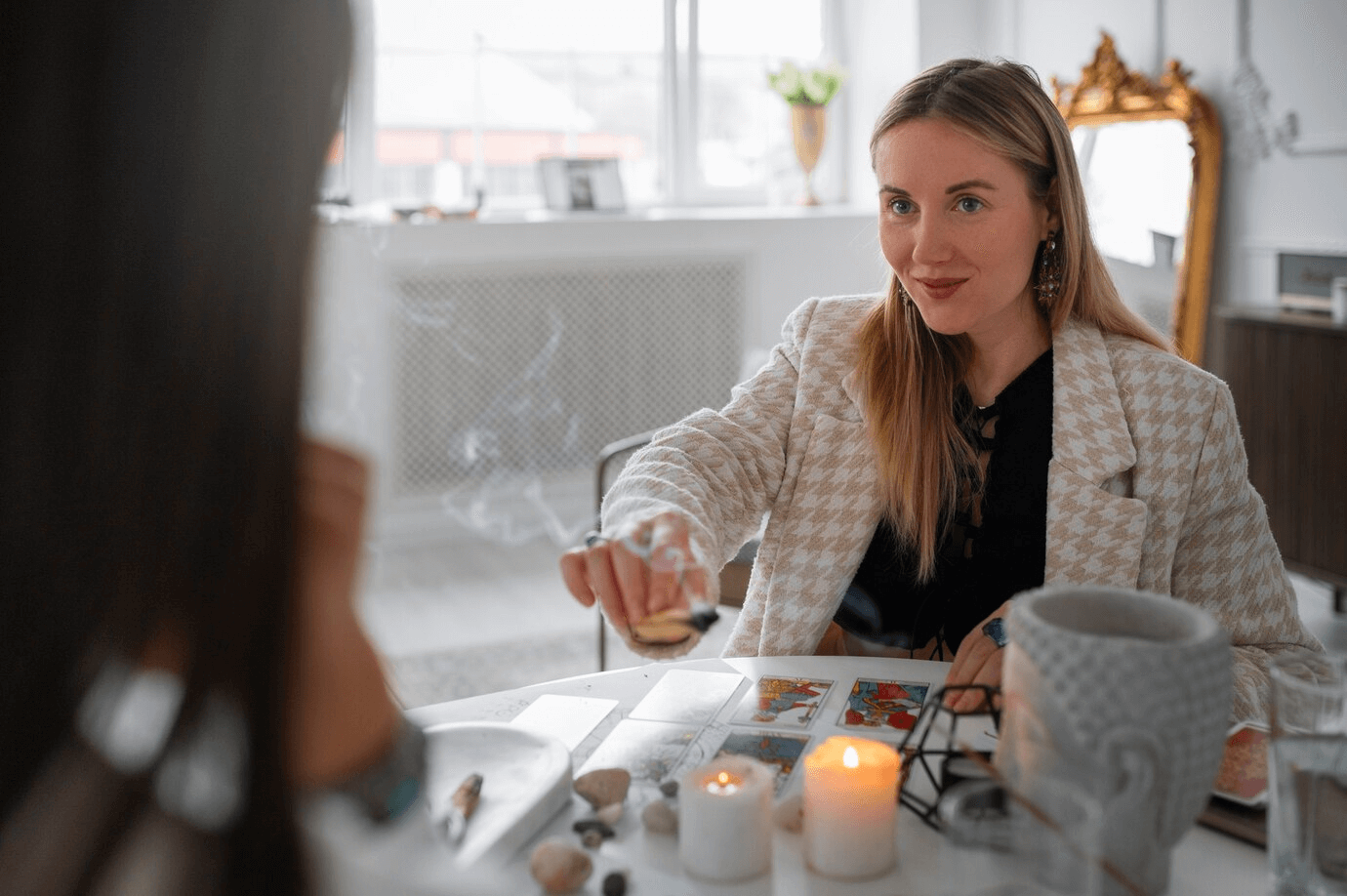
In Maria Menounos’ conversation with modern mystic Deirdre Hade, they go deep into spirituality, intuition, energy and even the relationship between mysticism and physics.
But underneath all of it is a surprisingly practical question:
How do you know when you’re doing what you’re supposed to be doing?
And maybe the answer has been showing up in your life all along.
Think About the Times You Were in Your Zone
You know those moments.
You’re doing something and suddenly you aren’t trying anymore.
You’re not second-guessing yourself.
You’re not thinking about what everyone else thinks.
You’re not forcing it.
You’re just…there.
Athletes call it being in the zone.
Artists call it flow.
You may have experienced it giving a presentation, solving a problem, cooking, writing, playing a sport, working with someone, helping a friend or doing something you’ve done a thousand times—except this time everything clicked.
Maria describes experiencing it while dancing.
At times she could be thinking about every move and struggling. But when she was completely connected, everything flowed.
She describes the same thing happening during photo shoots. When she’s disconnected, she’s thinking about the poses. When she’s connected, she doesn’t have to.
She just knows.
Deirdre calls that being in your “genius.”
Whatever you call it, pay attention to where it happens.
Because those moments may be telling you something.
Your Purpose May Have Been Showing Up Since You Were a Kid
Maria remembers wanting to be a marine biologist because she loved dolphins.
Then she wanted to be a veterinarian because she loved animals.
Eventually, the outside world started entering the conversation.
Maybe I’ll become a lawyer.
That would make my parents proud.
Maybe I’ll do this.
Maybe I’m supposed to do that.
That’s what happens to a lot of us.
As children, we’re drawn toward things without needing to explain why.
Then adulthood arrives.
We learn what’s practical.
What’s impressive.
What pays well.
What our parents value.
What society considers successful.
And slowly the question changes from:
What do I love?
to:
What am I supposed to do?
That doesn’t mean your childhood dream is necessarily your purpose. If you wanted to be an astronaut at six, you don’t need to apply to NASA tomorrow.
But there may have been something underneath that dream.
Adventure.
Discovery.
Animals.
Building.
Performing.
Helping.
Teaching.
Creating.
Leading.
Solving problems.
Maybe the job changed.
The thread didn’t.
Purpose Doesn’t Mean Quitting Your Job Tomorrow
This might be the most important part of the entire conversation.
When people begin questioning their purpose, it’s easy to turn it into an all-or-nothing decision.
I’m meant for something else.
I need to quit.
I need to start over.
I wasted 20 years.
Deirdre has different advice:
Explore it first.
She talks about people who came to her convinced they needed to leave established careers to pursue something completely different.
Her advice?
Keep your job.
Explore what is calling you.
See where it leads.
And sometimes something surprising happens.
They discover they don’t need an entirely different life.
They need to bring more of themselves into the life they already have.
That’s a huge distinction.
Purpose doesn’t always require reinvention.
Sometimes it requires integration.
You Can Live a Purpose Without Being the Person in the Spotlight
Deirdre shares her own example.
She had been a dancer, but a serious knee injury ended that path.
That could have been the end of the story.
Instead, dance remained part of her life in another form. She eventually supported other dancers and became involved with a ballet organization.
She wasn’t performing the dream herself.
She was helping someone else live it.
And she found joy there too.
That’s worth remembering because we tend to attach purpose to achievement.
If I love music, I need to become a musician.
If I love sports, I need to be an athlete.
If I love animals, I need to become a veterinarian.
If I love movies, I need to make one.
Not necessarily.
You can coach.
Mentor.
Volunteer.
Invest.
Teach.
Support.
Create opportunities.
Become part of a community.
Sometimes being connected to something you love is enough to awaken the part of you that has been missing.
Your Body May Know Before Your Brain Does
There’s another simple idea in this conversation that Maria says she’s been practicing:
Check in with your body.
Our brains can talk us into almost anything.
We can make the spreadsheet.
List the pros and cons.
Explain why something makes sense.
Tell ourselves why we should do it.
Meanwhile, our shoulders are tense.
Our stomach is turning.
We’re anxious every time the person’s name appears on our phone.
Something doesn’t feel right.
Maria talks about noticing this even while interviewing someone for a job.
Instead of only evaluating what the person says, she asks herself:
How does my body feel right now?
Is she tense?
Relaxed?
Anxious?
Calm?
That doesn’t mean every nervous feeling is a mystical warning from the universe.
It means your body is giving you information too.
And maybe we’ve become so accustomed to thinking our way through life that we’ve stopped listening to it.
Stop Trying to Figure Everything Out
Maria admits something many of us do:
She thought she was supposed to figure everything out.
What’s the right decision?
What’s the right balance?
What’s my next move?
How do I make this work?
So we think.
Then think some more.
Then run the same problem through our head for the 87th time and wonder why the answer still hasn’t appeared.
Deirdre describes eventually learning to ask for guidance, surrender the problem for a moment and watch what came up instead of continually forcing an answer.
Whether you think of that guidance as God, intuition, your subconscious, prayer, wisdom or simply giving your overloaded brain some room to breathe, there’s something valuable in the practice.
Not every answer arrives because you thought harder.
Sometimes you need enough quiet to hear what you already know.
Look at the Environment Around Your Best Moments
Maria offers one of the most practical exercises of the conversation.
Think about moments when you were absolutely in your element.
When did you feel confident?
Creative?
Powerful?
Alive?
When did things seem to flow?
Now look around that moment.
Who was there?
What were you doing?
What kind of environment were you in?
Were you leading?
Creating?
Competing?
Helping someone?
Working alone?
Working with a team?
Were you under pressure?
Were you relaxed?
Who brought the best out of you?
Because finding more purpose may not begin with asking:
What should I do with the rest of my life?
That’s a gigantic question.
Try this instead:
When have I felt most like myself?
Then start looking for patterns.
The People Around You Matter
There’s another part of getting into your zone that we sometimes underestimate:
Your environment.
Maria talks about how much easier it is for her to perform at her best when she’s surrounded by people who believe in her—people who want more for her, encourage her and bring good energy into the room.
Think about your own life.
There are people around whom you expand.
You have ideas.
You laugh.
You’re confident.
You think bigger.
And there are people around whom you shrink.
You second-guess yourself.
You become guarded.
You leave exhausted.
Purpose isn’t only about what you’re doing.
Sometimes it’s about who you’re becoming while you’re doing it.
And Then There’s Self-Love
Near the end of the conversation, Maria comes back to what may be the foundation underneath everything else.
Self-love.
Not ego.
Not thinking you’re better than everyone.
Not pretending you don’t have flaws.
It’s being able to look at yourself and say:
I’m on my side.
Because it’s difficult to trust yourself if your internal voice spends all day tearing you apart.
It’s difficult to follow intuition when you constantly tell yourself your instincts are wrong.
It’s difficult to enter that state of flow when half your mental energy is being spent worrying about whether you’re good enough.
Maria realizes how rarely we actually tell ourselves something positive.
We’re much better at identifying what needs fixing.
Maybe that’s something worth reversing.
Don’t Find Your Purpose. Follow the Clues.
You don’t have to figure out your entire life today.
Instead, become a detective of your own life.
Look for the clues.
What did you naturally love before someone told you what you should love?
When have you been so absorbed in something that you forgot about time?
What gives you energy instead of draining it?
Who brings out the best version of you?
When does your body tell you yes?
When does it tell you no?
Where have you surprised yourself with what you were capable of?
And what part of your life keeps quietly asking for more attention?
Maybe your purpose isn’t waiting at the end of some massive life transformation.
Maybe pieces of it have been appearing your entire life.
You just haven’t been calling them clues.
I particularly like “Don’t Find Your Purpose. Follow the Clues.” That could actually be the title instead; it has more curiosity and feels very HealSquad.