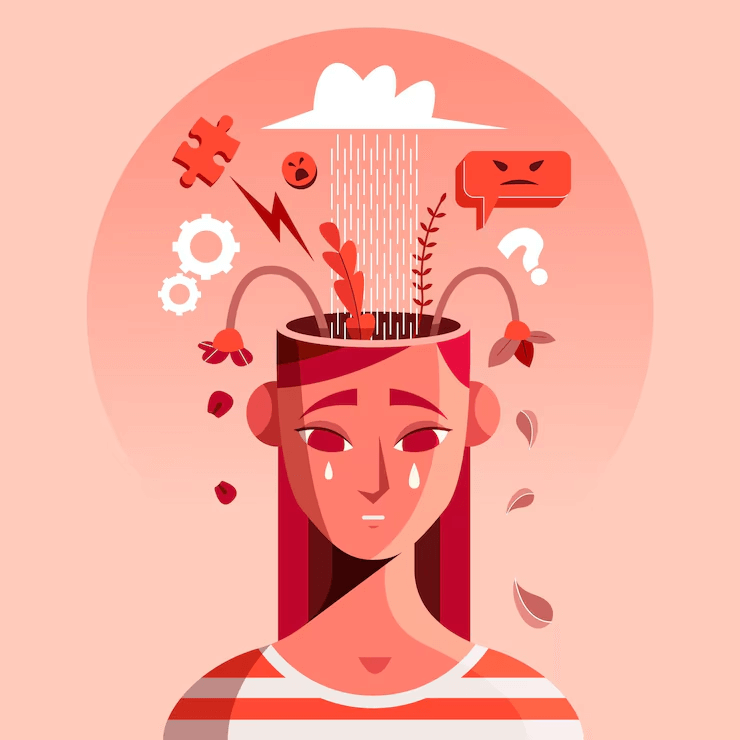
What Do You Really Believe? The Connection Between Faith, Emotion and Mental Health
We spend a lot of time trying to change how we think.
Think positively. Control the negative thoughts. Don’t let fear take over. Get out of your head.
But mental health counselor Dr. Anita Phillips suggests we may be starting one step too late.
Because before the thought often comes something deeper:
What do you believe?
Not necessarily what religion do you belong to. Not what church do you attend. Not even whether you consider yourself religious.
What do you believe about the things you cannot see?
What do you believe about yourself? About suffering? About death? About why you’re here? About what human beings owe one another?
And perhaps most importantly:
How are those beliefs shaping the way you feel and the way you live?
In a conversation with Heal Squad, Dr. Phillips explores the connection between spirituality, emotions and mental health—and offers a different way of understanding ourselves from the inside out.
What Do You Believe About What You Can’t See?
For years, Phillips says, psychology and religion had an uneasy relationship.
Religion was often viewed within psychology as something that could potentially undermine mental health. In response, people for whom religion was deeply important sometimes felt they couldn’t trust psychology.
The result was a divide.
Phillips believes we need room for both conversations.
She uses faith as an umbrella that can include both religion and spirituality. But rather than beginning with labels, she asks a beautifully simple question:
What do you believe about what you can’t see?
Do you believe in God? A deity? Angels? An afterlife? An invisible world? Do you believe there’s something larger than yourself—or that there isn’t?
The goal isn’t to debate which answer is correct.
It’s to understand your answer.
Because those beliefs may be affecting your emotional life far more than you realize.
Spirituality Isn’t Just About Feeling Peaceful
We often use spirituality almost as another word for peace, connection or transcendence.
Phillips makes an important distinction.
Those are emotions.
Spirituality goes deeper into what we believe about reality itself.
Who or what created us?
Is there something beyond the physical world?
What happens when we die?
Is there meaning in suffering?
Are we being protected from hardship—or strengthened to move through it?
These questions may sound philosophical, but Phillips argues that they have very practical consequences.
Because what we believe influences what we feel.
Maybe We’ve Put the Mind in Charge of Too Much
Modern Western culture places enormous emphasis on the mind.
Analyze it.
Understand it.
Prove it.
Think your way through it.
Control your emotions with your thoughts.
Phillips points out that historically, however, human beings often viewed the heart as the center of life.
As science became increasingly central to Western culture, she says, the mind began replacing the heart as king.
And something may have been lost in the transition.
Phillips sees the human experience as interconnected:
Spirit. Emotion. Mind. Body.
When we divide those into separate pieces, we can miss how powerfully each affects the others.
Mental health isn’t simply about what’s happening in your thoughts.
It’s about the whole person.
Your Emotions Aren’t the Enemy
This leads to one of Phillips’ most important ideas:
Emotions aren’t simply something to control. They’re something to listen to.
Our culture tends to divide emotions into good and bad.
Joy? Good.
Peace? Good.
Fear? Bad.
Sadness? Bad.
Anxiety? Get rid of it.
But Phillips argues that constantly trying to shut down painful emotions comes with a cost.
Because our positive and negative emotions come through the same emotional system.
Her analogy is simple: if you stop up the pipe, you stop up the whole pipe.
Trying not to feel sadness may also diminish your capacity for joy.
Avoiding vulnerability may also limit connection.
Suppressing fear doesn’t necessarily create courage.
The goal isn’t to feel good all the time.
It’s to become capable of experiencing what you actually feel.
What If Fear Is Trying to Tell You Something?
Phillips learned this lesson through an extraordinary personal experience.
During the birth of her daughter, she had studied a method that taught women to pay attention to their emotions as signals during labor.
Her physical signs didn’t suggest that delivery was imminent.
Her emotions did.
As labor progressed, she recognized emotional stages she had learned to expect. Eventually she reached a point where she felt completely overwhelmed—as though she couldn’t continue.
Rather than interpreting that feeling as failure, she recognized it as information.
She believed she was close.
She was right.
Within a short period of time she was pushing, and her husband delivered their daughter at home.
For Phillips, the experience fundamentally changed the way she understood feelings.
They weren’t merely obstacles to overcome. They contained information worth hearing.
That doesn’t mean every emotion is always an accurate guide. Phillips stresses the importance of knowing whether you’re emotionally and mentally in a healthy place.
But it does mean we shouldn’t automatically assume an uncomfortable emotion needs to be eliminated.
Sometimes it needs to be heard.
Before You Fix Yourself, Find Your Baseline
So how do you know whether what you’re feeling is healthy for you?
Phillips suggests beginning with something surprisingly simple:
Who have you always been?
One exercise she gives clients is to complete this sentence several times:
“Ever since I was a kid, I…”
Ever since I was a kid, I worried about things.
Ever since I was a kid, I loved being outside.
Ever since I was a kid, I loved giving people gifts.
Ever since I was a kid, I needed time alone.
Ever since I was a kid, I was afraid of disappointing people.
Don’t judge the answers. Notice them.
You’re looking for your emotional baseline.
Phillips argues that we’re often trying to match some predetermined standard of how a healthy person is supposed to feel and behave.
But the more useful question may be:
What’s normal for me?
Then you can begin noticing when you’ve moved significantly away from that baseline.
You Probably Know Yourself Better Than You Think
There’s another empowering idea inside this exercise.
We sometimes enter therapy hoping someone else will finally explain us to ourselves.
Phillips sees the therapist’s role differently.
You’re the expert on you.
A therapist can ask questions, uncover patterns and help you unravel things you haven’t been able to make sense of.
But many of the answers aren’t being handed to you.
They’re being uncovered from within you.
Phillips’ baseline exercise creates a way to begin doing that yourself.
Slow down.
Pay attention.
Remember who you’ve been.
Then notice who you’ve become.
Five Questions That Can Help You Understand Your Life
Phillips offers another journaling practice built around five dimensions of spirituality.
These aren’t questions you need to answer in one sitting. They’re questions worth living with.
- What do I believe about a deity—or about reality itself? What do I believe exists beyond what I can see?
- What do I believe happens after death? Does life continue? Does connection continue? What does death mean within my worldview?
- What do I believe about morality? What do human beings truly owe one another?
- What do I believe my purpose is? Why am I here? What connections should I make? What mark do I want to leave?
- How do I bring those beliefs into my everyday life? How does what I say I believe actually show up in the way I live?
That fifth question may be the most important.
Because spirituality can easily remain abstract.
Then you have to go to work.
Do the laundry.
Deal with your family.
Pay the bills.
Handle the person driving you crazy.
Phillips asks us to bridge the two worlds:
How can I make the life I’m actually living more congruent with what I say I believe?
Purpose Isn’t Productivity
One distinction in Phillips’ framework is especially relevant in a culture obsessed with accomplishment.
Purpose isn’t the same thing as productivity.
Your purpose isn’t necessarily your career.
It isn’t how much you accomplish.
It isn’t how busy you are.
Phillips describes legacy as one dimension of purpose.
Ask:
How will something be different because I was here?
Maybe that’s the larger world.
Maybe it’s your community.
Maybe it’s your family.
Maybe it’s one person’s life.
Purpose isn’t necessarily about doing something enormous.
It’s about understanding what you want your existence to contribute.
What Do Human Beings Owe Each Other?
When discussing morality, Phillips goes even deeper.
She suggests thinking about human experience through four broad categories:
Emotional pain. Emotional pleasure. Physical pain. Physical pleasure.
Then ask which matters most deeply to you.
Perhaps you’re drawn toward creating emotional pleasure—bringing joy, peace, love or happiness into other people’s lives.
Maybe you’re especially concerned with reducing physical pain—feeding people, fighting poverty, finding cures or helping people have safe places to live.
Your answer can reveal something about the moral code underneath the way you live.
Instead of simply saying, I want to be a good person, ask:
What kind of human experience do I most want to create—or alleviate—for other people?
That’s a much deeper question.
Not Everything Happens for a Good Reason
The conversation becomes especially powerful when Phillips talks about her own family.
Her older sister experienced severe mental illness beginning when Phillips was young, including hallucinations with religious imagery.
Phillips grew up in a deeply religious family. Her parents were pastors, and prayer was central to their lives.
But they didn’t initially understand what was happening as mental illness.
Eventually her sister became extremely ill and was hospitalized. Phillips says her sister later died as a result of her mental illness.
The experience left Phillips with the question that ultimately helped shape her life’s work:
How do we understand suffering across the spiritual, emotional, mental and biological dimensions of being human?
Her answer rejects a phrase many of us have heard during our hardest moments.
Everything happens for a reason.
Phillips adds an important qualification:
Everything may happen for a reason, but that doesn’t mean everything happens for a good reason.
Sometimes bodies become sick.
Sometimes people hurt other people.
Sometimes terrible things happen.
We can exhaust ourselves trying to manufacture a beautiful explanation for something that was simply awful.
Phillips doesn’t believe we have to.
Something Good Can Come From It Without It Having Happened for Good
This distinction may be one of the most freeing ideas in the entire conversation.
Purpose can come out of suffering without purpose having caused the suffering.
You don’t have to believe the tragedy happened so that you would grow.
You don’t have to believe you lost someone so that you could help others.
You don’t have to transform every painful experience into evidence that it was somehow supposed to happen.
Something can be painful and unfair—and you can still create something meaningful from it.
Prayer may not prevent the painful experience.
Faith may help strengthen you through it.
Those are very different ideas.
Your Beliefs Become Especially Important When Life Falls Apart
Imagine two people experiencing the same crisis.
One believes:
If God loves me, bad things won’t happen to me.
Another believes:
Bad things can happen, and my faith will help give me strength to move through them.
The event may be identical.
But Phillips argues that their emotional responses can be profoundly different because the event collides with two different belief systems.
That’s why understanding your beliefs matters.
When something happens that doesn’t fit anywhere inside your worldview, you can become deeply destabilized.
Suddenly you’re not only dealing with what happened.
You’re dealing with the collapse of what you thought was true.
Sometimes healing requires expanding or reconsidering that framework.
Believing Isn’t the Same as Thinking
Phillips offers one more distinction that helps connect all of this.
Thinking and believing aren’t the same thing.
Thinking is a process.
We analyze.
Compare.
Question.
Reason.
Belief feels more like truth.
And Phillips suggests that our strongest emotions often arise not simply from what we’re thinking—but from what we believe.
You’re nervous before a date because you believe it probably won’t work out.
You’re terrified by a setback because you believe it means something terrible about your future.
You’re devastated by someone’s rejection because you believe their rejection says something about your worth.
So perhaps instead of only asking:
What am I thinking right now?
We should sometimes go one layer deeper:
What must I believe for this to feel the way it does?
That’s a very different question.
Maybe the Goal Isn’t to Have All the Answers
Phillips isn’t telling us what we should believe.
In fact, one of the most powerful parts of her approach is that two people can belong to the same religion and hold very different spiritual beliefs.
Two people can also belong to different religions—or no religion at all—and wrestle with many of the same fundamental questions.
What matters is becoming conscious of your own answers.
What do you believe about what you can’t see?
What do you believe about suffering?
What do you believe happens when we die?
What do you believe human beings owe one another?
What do you believe you’re here to contribute?
And then perhaps the biggest question:
Does the way you’re living reflect those beliefs?
You don’t need to solve all of that today.
Maybe you simply open a notebook.
Write:
“Ever since I was a kid, I…”
Finish the sentence five times.
Then start asking yourself what you really believe.
Because you may discover that understanding your emotional life doesn’t begin with controlling your thoughts.
It begins with understanding the beliefs underneath them.