Your Gut and Your Feelings Are More Connected Than You Think
You can eat the right foods. Exercise. Take the supplements. Do the meditations. Follow the wellness routines.
And still not feel well.
According to functional medicine expert Dr. Will Cole, that’s because there’s another part of health we don’t always address: what we’re feeding our head and our heart.
In his book Gut Feelings, Cole explores the connection between physical and emotional health—and introduces a term for something he sees frequently in his patients: “shameflammation.”
It’s his way of describing how chronic stress, shame and unresolved emotional experiences can affect our physiology, just as what’s happening physically can affect how we feel emotionally.
The bigger message?
Mental health and physical health aren’t two separate conversations.
Your Body and Mind Are Constantly Talking
We tend to divide health into categories.
Digestive problems go to one doctor.
Hormones to another.
Anxiety somewhere else.
Stress? We try to manage that ourselves.
Cole argues that the body doesn’t operate in those separate boxes.
The gut, immune system, nervous system, hormones and brain are constantly communicating with one another. That’s why he describes the relationship between physical and emotional health as bidirectional.
What happens in the body can affect the mind.
And what happens in the mind can affect the body.
It’s also why phrases like gut feeling, gut instinct and butterflies in my stomach feel so intuitive. We experience that connection even if we don’t understand all the biology behind it.
What Is “Shameflammation”?
Cole uses “shameflammation” to describe the impact emotions such as shame—and factors that can fuel it, including chronic stress and unresolved trauma—may have on our physiology.
In his clinical work, he says he sometimes sees people doing everything they believe they’re supposed to do nutritionally, yet they’re still struggling with symptoms or abnormal markers.
They’re focused intensely on what they’re putting on their plates.
But Cole wants them to consider another question:
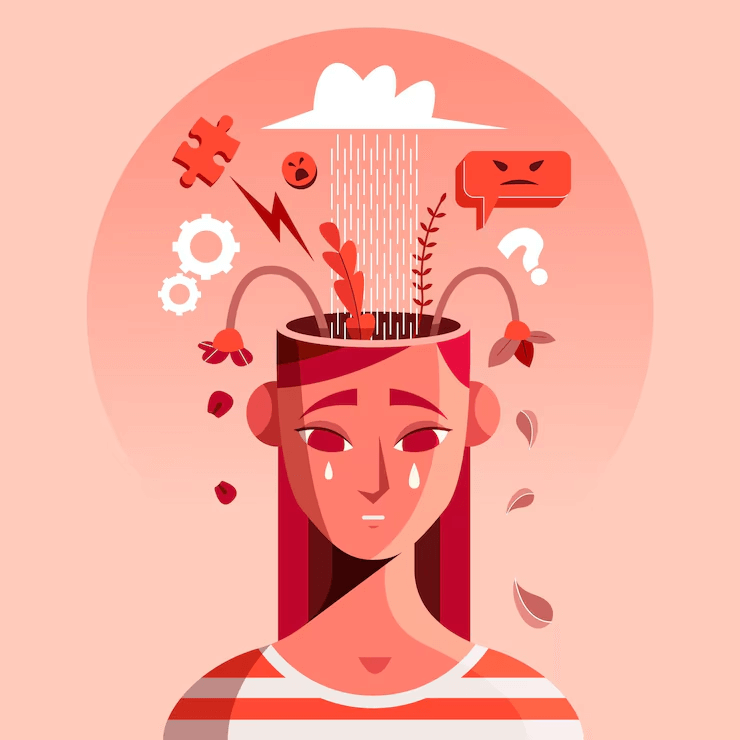
What are you feeding your mind every day?
Stress?
Self-criticism?
Fear?
Guilt?
The belief that you’re failing because you haven’t figured everything out?
His point isn’t that emotions are the sole cause of disease. It’s that emotional health deserves a place in the larger health conversation alongside nutrition and other physiological factors.
Stressing About Stress Can Become Its Own Problem
Here’s where things get frustrating.
You learn that chronic stress may affect your health.
So now you’re stressed about being stressed.
Then you get angry with yourself because you can’t relax.
You know you’re supposed to slow down.
You just don’t know how.
Maria Menounos describes experiencing exactly this during her own recovery: knowing stress wasn’t helping her while still finding herself going down stressful rabbit holes—and then criticizing herself for doing it.
Cole’s response is an important one:
Give yourself some grace.
Being healthy doesn’t mean never worrying, crying, becoming overwhelmed or struggling.
Sometimes life really is difficult.
Trying to force yourself to have everything together can simply add another layer of pressure to an already stressful situation.
Maybe You Don’t Need Another Wellness Protocol
When we’re struggling, our instinct can be to add something.
Another meditation.
Another supplement.
Another routine.
Another morning ritual.
Another thing we’re supposed to do perfectly.
Cole suggests that sometimes the answer isn’t doing more.
It’s self-compassion.
He points to research discussed in his book involving stressful tasks such as math and public speaking. Participants who practiced greater self-compassion showed lower levels of an inflammatory marker measured in the study.
His takeaway is refreshingly uncomplicated:
Sometimes the next step isn’t another elaborate health protocol.
Sometimes it’s being a little less hard on yourself.
Your Nervous System Has a Gas Pedal and a Brake
Cole also explains health through the autonomic nervous system.
Think of it as having two broad modes.
Your sympathetic nervous system is the gas pedal—the fight-or-flight response that helps you react when something demands attention.
Your parasympathetic nervous system is more like the brake—the rest-and-digest state associated with recovery and relaxation.
Neither is inherently bad. We need both.
The problem is when we’re constantly pressing the gas.
Work pressure. Family problems. Health concerns. Financial worries. Notifications. Deadlines. Lack of sleep.
Eventually, being “wired and tired” can start to feel normal.
Cole discusses the vagus nerve as an important part of this rest-and-digest system and encourages practices intended to help people cultivate more moments of regulation.
You Don’t Have to Meditate on a Mountain
This is where the conversation becomes especially practical.
Supporting your emotional health doesn’t necessarily require an expensive retreat or an hour-long meditation every morning.
Cole discusses practices including breathwork, spending time in nature and other mind-body approaches. He also talks about therapeutic approaches such as EMDR for people working through trauma with appropriate professional support.
Even singing, humming and chanting come up in the conversation as examples of practices associated with the vagus nerve and somatic experience.
The larger point isn’t that everyone needs to do all of these things.
It’s that small ways of slowing the system down count.
A walk outside counts.
A few intentional breaths count.
Music counts.
Rest counts.
Doing absolutely nothing for a few minutes can count too.
Nature Can Be Medicine for a Stressed Mind
One practice Cole discusses is the Japanese concept of shinrin-yoku, commonly translated as forest bathing.
Despite the name, there’s no actual bathing involved.
It’s simply spending intentional time immersed in nature.
No destination required.
No step goal.
No podcast playing at 1.5x speed.
The purpose is the experience itself.
Cole points to research connecting time in nature with reductions in stress and other physiological benefits.
And there’s something appealing about the simplicity of it.
You don’t have to achieve anything.
You just have to be there.
Start With the Side You Can Handle
Perhaps one of the most useful ideas in the conversation is that healing doesn’t have to begin in the same place for everyone.
Cole describes a patient with significant past trauma who simply wasn’t ready to address it.
And he didn’t force her to.
Instead, they began with the physiological side—nutrition, gut health and things she felt capable of changing.
For someone else, changing their diet may feel overwhelming while breathwork, therapy or getting outside feels manageable.
Cole’s advice is essentially:
Start with the bridge you’re ready to cross.
That’s very different from the all-or-nothing mentality wellness culture can create.
You Don’t Have to Fix Everything at Once
Maybe you know there are emotional things you haven’t dealt with.
Maybe you know your diet could be better.
Maybe you’re chronically stressed.
Maybe your sleep is terrible.
Maybe you’ve been putting off a doctor’s appointment.
Seeing all of those things at once can make improving your health feel like another full-time job.
So don’t start with everything.
Start with something.
Make one meal more nourishing.
Go outside.
Take a walk without your phone.
Try a few minutes of breathing.
Ask for help.
Schedule the appointment you’ve been avoiding.
Or simply recognize that you’re going through something difficult and stop demanding that you handle it perfectly.
Health Shame Can Keep Us From Getting Help
There’s another side of shame that deserves attention.
Sometimes we’re embarrassed that something is wrong with us.
We don’t want people to see us as sick.
We don’t want to admit we’re struggling.
We don’t want to get the test because we’re afraid of what it might show.
So we delay.
Cole and Menounos discuss how shame around our bodies and health can cause people to put appointments, scans and tests on the back burner.
That makes talking openly about health important.
Not because every symptom is something serious.
But because embarrassment shouldn’t be the reason we don’t take care of ourselves.
What Are You Feeding Your Head and Your Heart?
Nutrition matters.
Exercise matters.
Sleep matters.
Medical care matters.
But Cole’s argument is that we shouldn’t obsess over those pieces while ignoring what’s happening emotionally.
Because you can eat the healthiest meal in the world while mentally serving yourself a steady diet of criticism, pressure and shame.
So perhaps there’s one more question worth adding to your wellness routine.
Not just:
What am I feeding my body?
But:
What am I feeding my head and my heart?
And if the answer lately has been stress, fear or relentless self-criticism, the first step doesn’t have to be complicated.
It might simply be giving yourself a little more compassion than you did yesterday.