Shame doesn’t always announce itself.
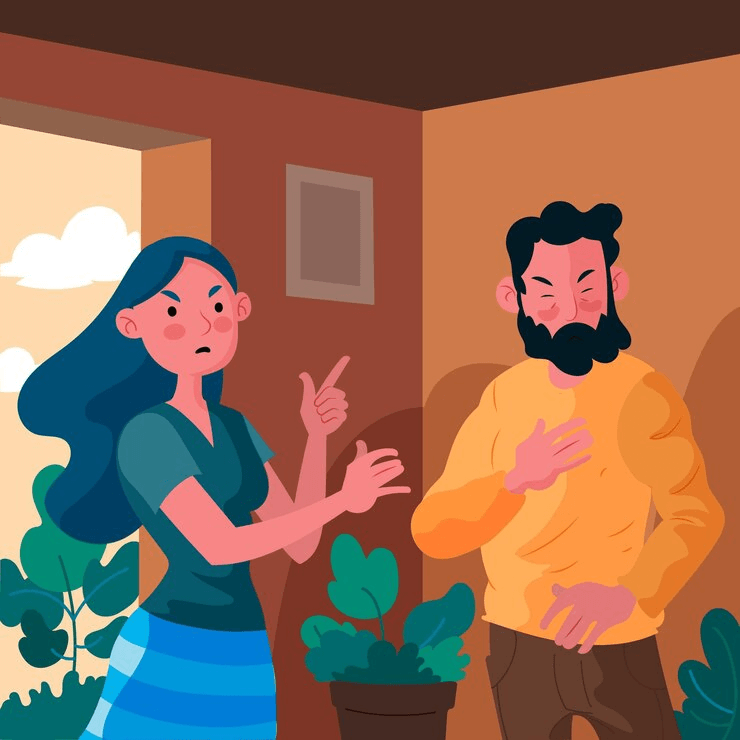
Sometimes it can be a raised eyebrow. A sideways glance. The feeling that you’re different from everyone else. The instinct to change the way you speak so you fit in. Or the voice in your head warning you not to say something, do something, or make the same mistake again.
According to trauma expert and somatic experiencing practitioner Brian Mahan, these seemingly small moments can have a much bigger impact than we realize.
“Shame is what I call the death by a thousand paper cuts,” Mahan told Maria Menounos.
And understanding how those “paper cuts” affect us, he says, may require looking beyond our thoughts and paying attention to what is happening in our bodies.
Shame Can Start Earlier Than We Realize
Mahan’s approach begins with the idea that trauma is not solely psychological. He describes it as having a physiological component because our bodies can react to threatening or wounding experiences before we have the ability to fully think, reason or even put those experiences into words.
He points to what he calls embodied or implicit memory—the way the body can retain information even when we don’t have a traditional, explicit memory of an event.
That distinction matters because, as Mahan explains it, childhood is filled with experiences that can shape how we see ourselves and our relationships with other people.
“We’re born with a longing for belonging,” he said.
As children, remaining connected to the people caring for us is essential. When something threatens that connection, Mahan says the nervous system can respond as though something important is at stake.
Those experiences don’t necessarily have to be dramatic.
Maria asked about what she called the “micro shamings” that can happen throughout life.
Mahan agreed. Shame, he said, can be communicated through something as subtle as a look, an expression or a reaction from someone around us.
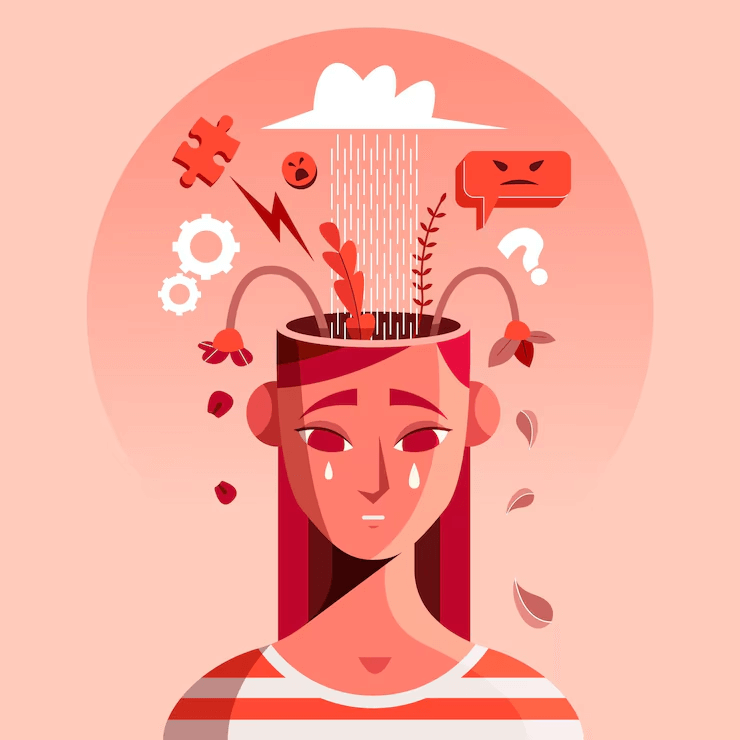
Over time, those experiences can contribute to beliefs about ourselves: I’m not good enough. I’m different. I don’t belong. I shouldn’t be angry. I shouldn’t say that. There’s something wrong with me.
Shame Isn’t Always About Feeling “Less Than”
One of Mahan’s more surprising observations is that shame can appear anywhere we perceive ourselves as different from the people around us.
That can mean feeling less than others—but it can also mean feeling as though you have more.
Mahan recalled growing up in an affluent household and receiving an education that gave him a larger vocabulary than some of his friends. Rather than allowing that difference to separate him from the group, he consciously changed the words he used and the way he spoke.
“I would dumb myself down,” he said.
The same dynamic appeared for him during COVID-19. While people around him were losing jobs and struggling, his work was already largely conducted remotely. His practice actually became busier.
There were people he didn’t feel comfortable telling because of the inequity between their experiences.
For Mahan, that’s an important part of understanding shame: it can exist wherever there is a feeling of being “other.”
What Shame Can Feel Like in the Body
Mahan describes shame as a physiological survival response as well as an emotional experience.
When someone feels that a social connection is threatened, he says the reaction can include looking down and away, constriction in the throat, the chest collapsing and the shoulders rolling forward. In more intense moments, a person may freeze, withdraw or shut down.
Repeated often enough, Mahan believes those responses can become familiar patterns.
That helps explain why simply deciding to think differently may not always be enough to change them.
Positive thinking, affirmations, mantras and challenging negative thoughts can all be helpful, Mahan said. But he doesn’t necessarily consider them curative.
If a negative thought appears and we immediately replace it with a positive one, he argues, the original response hasn’t necessarily disappeared.
Instead, his somatic approach asks a different question:
What is happening in your body when that thought or feeling appears?
Maria Menounos Saw That Connection in Her Own Body
Maria experienced this firsthand while going through a difficult period with her mother’s health.
She described feeling a hard, almost concrete-like sensation around her right groin whenever something frightening happened involving her mom—a missed appointment, a mistake or another moment that triggered panic.
During her work with Mahan, they began paying attention to that physical sensation.
After working with it during a session, Maria said the sensation disappeared.
She was stunned.
“I kept looking for it,” she recalled. “I’m like, wait, where are you? You’re always there.”
Eventually, the sensation returned during the later stages of her mother’s journey. Maria contacted Mahan, and they worked with it again. She said it disappeared a second time.
But their work also led somewhere Maria hadn’t initially expected: back to her childhood and the fear surrounding her father’s diabetes.
When Hypervigilance Becomes a Way of Life
Maria grew up constantly aware that her father’s blood sugar could fall to dangerously low levels.
She remembered being at school and suddenly feeling that something was wrong, going home and finding her father on the floor, and having to revive him.
“We always lived on pins and needles,” she said.
Mahan described that experience as hypervigilance and bracing.
Maria connected it to how she had lived for years: always looking for the problem and always preparing herself for what might happen next.
In their work together, Mahan connected the physical sensation Maria had been experiencing as an adult with an earlier memory: standing in the kitchen as a little girl while her mother was on the phone, frightened about Maria’s father.
For Mahan, this illustrates why our current reactions may sometimes be connected to older patterns.
A thought, feeling, belief and behavior can become what he calls a “cluster.” When something in the present triggers that cluster, the old response can return—even when the present situation isn’t identical to the original one.
Why Your Brain Keeps Looking for the Problem
Mahan divides the brain into three simplified areas when explaining this process.
The “higher brain,” or neocortex, is the thinker. It reasons, judges, compares, puts things into perspective and solves problems.
But Mahan points out that a problem solver can also become a problem seeker.
Left unchecked, he says, the thinking brain can continually search for what could go wrong. Meanwhile, the lower or more primal brain—the part he describes as our early warning system—is taking in that information and preparing the body to respond to a potential threat.
That means worrying about something that hasn’t happened yet can still produce an experience in the body right now.
“You end up having the experience now that you’re wanting to avoid later,” Mahan explained.
One tool he recommends is orienting to the immediate environment through the five senses. Instead of remaining entirely inside thoughts about what could happen, the person begins taking in information about what is actually happening around them in the present moment.
The goal is to recognize: In this moment, I am safe.
The Inner Critic May Be Trying to Protect You
Mahan also offers a different way of looking at the relentless inner voice many people struggle with.
As we absorb messages from parents, siblings, teachers, coaches, peers, media and the rest of the world, he says we can develop what amounts to an “inner police” or inner critic.
But rather than viewing that voice simply as an enemy, Mahan sees it as an attempt at protection.
Don’t say that. Don’t do that again. What were you thinking?
The voice is trying to keep us from doing something that could jeopardize our connection with other people.
The problem is that a survival strategy developed much earlier in life may continue operating long after we need it.
That is where Mahan believes somatic work can help.
Rather than diving into an overwhelming feeling all at once, he describes approaching it gradually—touching the edge of the sensation and then pulling back, allowing the nervous system to settle before approaching it again.
Maria Realized Something Had Changed
Near the end of the conversation, Maria had a realization.
Since doing this work, she had stopped panicking about her father at night.
She wasn’t rushing into his room because she suddenly feared his blood sugar had dropped. She had put practical resources in place, including a caretaker, and decided she wasn’t going to continue living in constant fear.
“I’m calmer,” she said. “I sleep well. I’m not stressed.”
Mahan saw two changes happening at once.
Maria had changed her external circumstances by putting support in place. But he also believed her internal responses—the thoughts, feelings, behaviors and beliefs that had been clustered together for so long—had begun to change.
Mahan noticed something similar during his own healing journey. Although he initially sought somatic experiencing after a catastrophic car accident and severe panic attacks, he eventually realized his relationships were changing, too.
He wasn’t as easily triggered. He had more awareness, perspective and resources.
His practitioner gave him a simple explanation: he had changed, so his relationships were changing.
For Mahan, that is ultimately what this work is about.
Not eliminating every difficult feeling. Not pretending painful experiences never happened. And not simply forcing ourselves to think positively.
It’s about developing greater awareness of the patterns we’re carrying, understanding what they may have been trying to protect us from, and becoming what he calls “more resourced.”