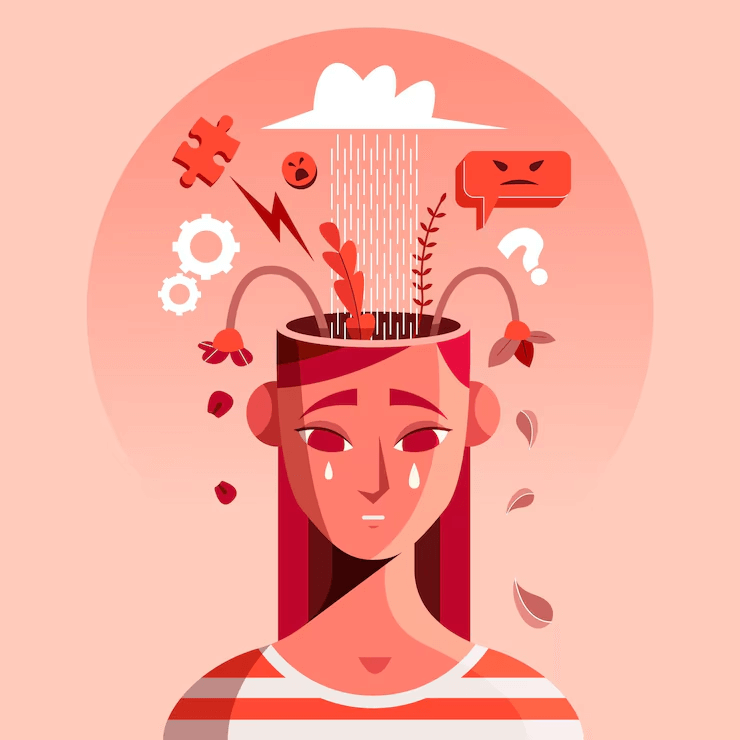
How to Calm Your Nervous System and Turn Triggers Into Tools for Growth
When something triggers you, your first instinct may be to get away from the feeling.
Someone criticizes you.
Your body feels strange.
A conversation makes you anxious.
You start worrying about your health.
Your mind races toward everything that could go wrong.
But what if some of those uncomfortable moments could be approached differently?
Dr. Kim D’Eramo, a physician and mind-body medicine practitioner, describes triggers, physical sensations and emotional reactions as opportunities to become more aware of what’s happening inside us. Rather than immediately fighting a feeling or trying to think our way out of it, she encourages people to slow down, reconnect with the body and become curious.
Her approach centers on a surprisingly small shift:
You don’t have to feel completely better. Sometimes becoming just 2% more open, relaxed or compassionate toward yourself is enough to begin changing your response.
Your Emotional State and Your Body Are Connected
D’Eramo’s central premise is that our emotional state and physical state aren’t separate experiences.
Stress can affect the body.
Fear can change breathing.
Anxiety can create muscle tension.
A perceived threat can activate the body’s fight-or-flight response.
And according to D’Eramo, the way we relate to those sensations matters too.
If you notice something uncomfortable and immediately think, Something is terribly wrong, that fear can create even more tension.
Instead, she encourages people to begin by noticing what’s happening without immediately trying to fix it.
That doesn’t mean ignoring symptoms or avoiding appropriate medical care. It means recognizing that fear about a sensation and the sensation itself aren’t necessarily the same thing.
What Does It Mean to Be “In Flow”?
D’Eramo describes two broad ways of responding to ourselves: flow and resistance.
Resistance can sound like:
I shouldn’t feel this way.
Why am I doing this again?
I hate myself for making that choice.
This needs to stop.
Flow doesn’t mean pretending everything is wonderful.
It might simply sound like:
Yes, this is happening. And I can still be kind to myself.
That distinction is important.
You can recognize that a behavior isn’t helping you without attacking yourself for doing it.
You can want to make a healthier choice without hating the version of yourself who hasn’t made it yet.
Try Being 2% Kinder to Yourself
“Happiness” can feel like an impossible goal when you’re struggling.
So D’Eramo makes the target much smaller.
Could you become 2% more forgiving?
Could you soften your body 2%?
Could you become 2% more curious?
Could you give yourself 2% more compassion?
Small shifts may feel more accessible than demanding that you suddenly transform your emotional state.
If you’re criticizing yourself for making a mistake, for example, the next step doesn’t have to be convincing yourself that the mistake was wonderful.
It could simply be:
I don’t like what happened, and I’m going to stop attacking myself for it.
That’s movement.
Replace “Yeah, But” With “Yes, And”
One of D’Eramo’s practical tools comes from an unexpected place: improvisational comedy.
In improv, performers often work from a principle called “yes, and.”
Instead of rejecting what has just happened, they accept it and build from it.
D’Eramo applies a similar idea to difficult circumstances.
Imagine saying:
Yes, I want to feel better, but I’m in pain.
The word but can effectively cancel everything before it.
Now try:
Yes, I’m experiencing pain, and I’m open to noticing where I feel even a little more comfortable.
The problem hasn’t disappeared.
You’re simply allowing another possibility to exist alongside it.
Find the Place That Already Feels Okay
When someone is hurting, telling them to “focus on the positive” can feel dismissive.
That’s not what D’Eramo recommends.
Instead, she suggests becoming very specific.
If your hip hurts, perhaps your shoulder doesn’t.
If your entire day feels stressful, perhaps there was one peaceful minute.
If you’re overwhelmed, perhaps one part of your body feels relaxed.
She describes this as looking for the place where there’s already a little more ease.
The goal isn’t to deny what’s wrong.
It’s to stop giving 100% of your attention to what’s wrong.
What You Focus On Can Shape Your Experience
D’Eramo traces this approach partly to her training in osteopathic medicine.
Rather than focusing exclusively on what seemed abnormal in a patient’s body, she says she was taught to also “find the health”—to notice areas of movement, ease and resilience.
She applies that principle beyond physical symptoms.
Someone you’re trying to help may seem completely resistant.
But are they really 100% resistant?
They asked for help.
They’re still talking to you.
Maybe there’s 2% openness.
Start there.
That can be especially useful for caregivers, friends and family members who become exhausted trying to convince someone to change.
Helping Someone Doesn’t Mean Fighting Their Resistance
Anyone who has tried to help a struggling loved one knows the frustration.
They say they want help.
You offer an idea.
They respond:
Yeah, but that won’t work.
You offer something else.
Yeah, but you don’t understand.
Eventually, both people become frustrated.
D’Eramo suggests interrupting the cycle.
Ask what the person does want.
Then notice what follows.
If the answer is:
I want to feel better, but…
there’s the resistance.
One question she proposes is:
Are you willing to surrender the “but”?
The answer may be yes.
It may be no.
It may be, I don’t know.
Any of those answers gives you more information than continuing the argument.
Why New Ideas Can Feel Threatening
Sometimes people don’t resist change because they’re stubborn.
A new possibility may threaten a belief system that has made them feel safe for years.
If you’ve understood your health, relationships or identity one way for decades, a radically different interpretation can feel destabilizing.
Even considering it can feel frightening.
D’Eramo suggests that people don’t necessarily need to embrace an entirely new worldview.
They might only need enough safety to explore it.
Again, think small:
Can I feel 2% safe considering another possibility?
That’s very different from demanding that you immediately believe something new.
Your Triggers May Contain Information
Criticism provides another opportunity for this kind of awareness.
Sometimes someone says something unpleasant and it rolls right off you.
Another person makes a seemingly minor comment and you’re furious for hours.
Why the difference?
D’Eramo suggests paying attention to what lands.
During her years working as an emergency physician, she remembers an exhausted night when a patient accused her of caring only about herself.
That particular criticism struck deeply.
Why?
She later connected it with earlier messages she’d absorbed about selfishness and putting other people’s needs first.
Whether or not the criticism itself was fair, her reaction contained information.
Think of a Trigger as an Invitation
This reframes the idea of being “triggered.”
Instead of:
How dare that person make me feel this way?
you might eventually become curious enough to ask:
Why did that particular comment affect me so strongly?
D’Eramo describes triggers as invitations to discover something we may not yet recognize about ourselves.
That doesn’t mean the person criticizing you is correct.
It doesn’t mean abusive behavior should be tolerated.
And it certainly doesn’t require accepting every stranger’s opinion about you.
It means your reaction may still be worth understanding.
There May Be 2% of Useful Feedback Inside 98% of Noise
Sometimes criticism really is mostly nonsense.
But occasionally there’s something useful buried inside it.
D’Eramo gives the example of being told she speaks too quickly.
Her initial reaction could have been defensive.
Instead, she considered whether there was something worth hearing.
Maybe the delivery was unpleasant.
Maybe much of the criticism wasn’t useful.
But perhaps there was a small piece that could help her communicate better.
That’s another version of the 2% principle.
You don’t have to accept someone’s entire judgment of you to consider whether one small part contains information you can use.
Don’t Analyze Every Trigger to Death
Once people understand this concept, another trap can appear:
I HAVE TO FIGURE OUT WHY I’M TRIGGERED.
Now the search for self-awareness becomes another source of tension.
D’Eramo recommends curiosity instead of interrogation.
Rather than forcing yourself to uncover the psychological explanation, notice what’s happening physically.
Where do you feel the reaction?
Your stomach?
Chest?
Jaw?
Shoulders?
Face?
Can you breathe while allowing the sensation to be there?
Sometimes, she says, insisting on intellectually understanding the “why” can itself become another form of resistance.
Curiosity Can Create Space
Compare these two internal reactions.
First:
Why am I like this? I shouldn’t be this upset.
Now:
Wow. I’m really activated by this. I wonder what’s happening here.
The second doesn’t solve the problem.
But it changes your relationship to it.
Curiosity creates space between you and the reaction.
That’s the space D’Eramo encourages people to practice entering.
The ABC Technique for Nervous System Regulation
One of the most practical tools D’Eramo shares is a three-step exercise she calls the ABC technique:
Awareness. Breathing. Conscious choice.
The practice is designed to interrupt automatic reactions and bring attention back into the body.
A: Awareness
Begin by noticing your body.
Soften your shoulders.
Notice your spine.
Observe your breathing.
Is your breath shallow?
Are you breathing primarily into your upper chest?
Is your stomach tight?
Are your shoulders tense?
Don’t immediately change anything.
Just notice.
That’s the first step.
B: Breathing
Next, allow your breathing to become slower and deeper.
D’Eramo suggests allowing the breath to move toward the belly.
The belly expands as you inhale and relaxes inward as you exhale.
She recommends taking several breaths this way.
Slow breathing can be a useful way of engaging the body’s relaxation response, particularly when stress has pushed breathing toward a faster, shallower pattern.
The goal isn’t to force relaxation.
It’s to give your body an opportunity to settle.
C: Conscious Choice
Once you’ve paused and reconnected with your body, ask what you actually want to choose.
Maybe it’s an affirmation.
Maybe it’s a question.
Maybe it’s simply:
What is actually called for right now?
This creates a moment between stimulus and response.
Instead of automatically reacting from fear, anger or habit, you’re giving yourself an opportunity to choose your next action more intentionally.
You Can Practice ABC in Seconds
D’Eramo emphasizes repetition rather than long sessions.
The technique might take a minute.
Eventually, it might take 10 seconds.
She suggests practicing several times throughout the day so the process becomes increasingly familiar:
Notice.
Breathe.
Choose.
The idea is to practice when things aren’t falling apart so the skill is easier to access when stress does arrive.
Calming Down Doesn’t Mean Ignoring a Medical Problem
One misconception D’Eramo addresses is the fear that calming yourself will make you less likely to act.
If you stop worrying about a symptom, won’t you ignore something serious?
She argues for the opposite interpretation.
Becoming calmer doesn’t require pretending a symptom isn’t there.
You can regulate your emotional response and still seek appropriate evaluation and treatment.
In fact, reducing panic may help you think more clearly about what needs to happen next.
If a symptom is new, severe, persistent or concerning, mind-body practices aren’t a substitute for medical care.
They can be used alongside appropriate professional evaluation.
Why Stress Can Feel So Physical
The fight-or-flight response is designed to help us respond to threats.
Your heart may beat faster.
Muscles tense.
Breathing changes.
Your attention narrows.
Those responses can be useful when immediate action is required.
The difficulty comes when the body remains in a state of heightened alert even when there’s no immediate physical danger.
Modern triggers don’t necessarily look like predators.
They can be emails.
Deadlines.
Arguments.
Social media.
Financial worries.
Health fears.
A constant stream of perceived threats can make it difficult to feel settled.
That’s one reason practices involving awareness and breathing may be useful: they create intentional moments in which the body is invited to shift out of constant reactivity.
What Is EFT Tapping?
The conversation also explores Emotional Freedom Technique (EFT), commonly called tapping.
EFT typically involves tapping specific points on the body while paying attention to thoughts, emotions or physical sensations.
D’Eramo describes using the practice to help people notice connections between emotional experiences and bodily reactions.
She also discusses using tapping with children experiencing anxiety and physical symptoms.
It’s important to distinguish personal or clinical anecdotes from established medical evidence. Experiences described in the conversation—including reports of symptoms improving after tapping—shouldn’t be interpreted as proof that EFT can diagnose or cure a medical condition.
For someone interested in tapping as a stress-management practice, it can be considered a complementary technique rather than a replacement for appropriate medical or mental-health care.
Children Can Learn Body Awareness Too
One interesting theme in the conversation is teaching children to recognize what happens inside their bodies.
Instead of only saying:
Stop worrying.
or:
Calm down.
children can begin learning to notice:
My stomach feels tight.
My heart is beating quickly.
I’m holding my breath.
I’m overwhelmed.
That language can help turn a vague feeling of “something is wrong” into an experience they can observe and communicate.
For children with significant anxiety, depression, suicidal thoughts or persistent physical symptoms, however, self-regulation exercises should complement—not replace—care from qualified healthcare or mental-health professionals.
Try the ABC Practice Right Now
You don’t need to wait until you’re overwhelmed.
Take a few seconds.
Awareness: Notice your shoulders, jaw, stomach and breathing.
Breathing: Let your shoulders soften and take a few slower breaths, allowing your belly to expand naturally.
Conscious choice: Ask yourself:
What do I need right now?
Don’t force an answer.
Notice what happens.
That may be the most important element of D’Eramo’s approach.
You’re practicing listening instead of immediately reacting.
The Goal Isn’t to Never Be Triggered
Triggers happen.
Stress happens.
Negative thoughts happen.
Bodies hurt.
People say upsetting things.
We become scared.
None of that means you’ve failed at regulating your nervous system.
The goal isn’t to become someone who never reacts.
It’s to become better at recognizing the reaction while it’s happening.
Then you have options.
You can soften instead of tense.
Become curious instead of judgmental.
Breathe instead of immediately react.
Say “yes, and” instead of “yeah, but.”
And perhaps most importantly, you can begin treating uncomfortable moments not automatically as evidence that something is wrong with you, but as opportunities to listen more closely to what your body and emotions are telling you.
Sometimes the first step toward feeling different isn’t making a massive change.
It’s creating just 2% more space for a different response.