Deepak Chopra on Meditation, Consciousness and Why “Love in Action” Changes Everything
What if meditation isn’t just about calming your mind?
What if it’s about changing your relationship with your body, your thoughts, other people—and ultimately, your understanding of who you are?
In this conversation on Better Together, Maria sits down with Deepak Chopra to talk about Total Meditation, consciousness, stress, breathing, activism, relationships and the idea that becomes the thread running through nearly everything else they discuss:
Love in action.
For Chopra, meditation isn’t simply a few quiet minutes carved out of a busy day. It’s a practice that can begin with a single breath and ultimately become a different way of moving through life.
Yes, Five Minutes of Meditation Still Counts
Meditation has become an industry.
There are apps, five-minute meditations, sleep meditations, guided meditations and programs promising to help with everything from stress to weight loss.
Maria asks Chopra whether we’ve watered down a thousands-year-old spiritual practice by packaging it into bite-sized pieces.
His answer is refreshingly practical: start wherever you are.
Chopra says meditation can be helpful whether you practice for one minute, five minutes, 20 minutes or much longer. While its traditional spiritual purpose goes far deeper, he doesn’t see anything wrong with someone beginning because they want to sleep better, manage stress or change a habit.
The doorway matters less than walking through it.
Meditation Isn’t About Stopping Your Thoughts
Chopra describes the mind as including our thoughts, emotions and imagination.
But consciousness, in his view, is something different.
It’s the awareness that knows you’re having those thoughts.
Think about it this way: you can notice that you’re angry. You can observe yourself worrying. You can recognize a thought and decide whether it’s useful.
So who—or what—is doing the noticing?
That’s where Chopra places consciousness.
And meditation, he explains, can help us move beyond the constant activity of the conditioned mind and become more aware of that deeper level of ourselves.
You Are Not the Roles You Play
This may be one of the most freeing ideas in the entire conversation.
We spend enormous amounts of energy defining ourselves.
I’m a parent.
I’m a spouse.
I’m a doctor.
I’m a writer.
I’m successful.
I’m struggling.
I’m the person other people say I am.
Chopra points out that he plays many roles himself: physician, author, husband, parent and child.
But none of those roles, he argues, is the entirety of who he is.
It’s like an actor playing different characters. The roles change. The actor remains.
Maria immediately connects with the idea because so much of life pressures us to define ourselves neatly for other people.
Her new response?
“I’m a lot of things.”
Maybe we all are.
Love Isn’t Something You Say. It’s Something You Do.
Chopra says his mantra for life is love in action.
“If love is without action, it’s irrelevant, and if action is without love, it’s meaningless.”
But what does love in action actually look like?
He offers four simple ways to practice it:
- Attention: Truly listen to another person.
- Affection: Let people know you’re there for them.
- Appreciation: Recognize the gift they bring to your life.
- Acceptance: Stop trying to turn them into someone else.
Suddenly, “I love you” isn’t just a phrase.
It’s how closely you listen. It’s whether you show up. It’s whether you notice someone. And maybe most importantly, it’s whether you can allow them to be who they are.
You Don’t Have to Live in a State of Outrage to Make a Difference
The conversation takes an unexpected turn when Maria talks about stepping away from the news and the conflict surrounding it.
She wonders whether disengaging from all that noise means disengaging from the responsibility to make the world better.
Chopra distinguishes between what he calls activism and “sacred activism.”
He describes having been involved in the activism of the 1970s but eventually becoming uncomfortable with activism driven primarily by anger, conflict and moral outrage.
His alternative isn’t to stop caring.
It’s to help without allowing yourself to become consumed by the fight.
Instead of becoming emotionally trapped in every conflict, ask:
What can I actually do that helps?
Chopra sums up the idea beautifully: rather than fighting darkness, bring in light.
For Maria, it lands because it validates another way of contributing—educating, sharing, helping and trying to put something positive into the world without having to live in a permanent state of anger.
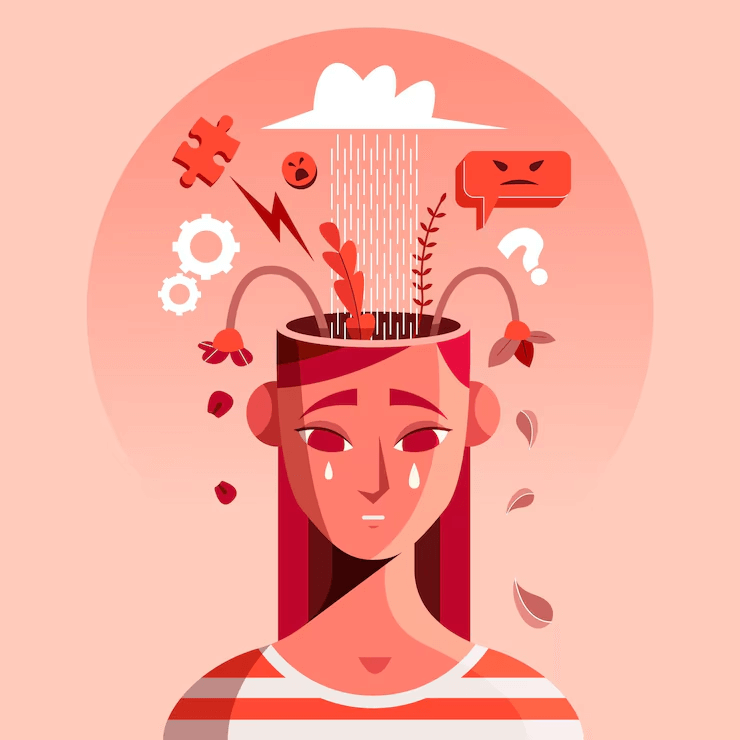
How Much of Your Stress Deserves the Meaning You’re Giving It?
Then Chopra zooms way, way out.
He talks about the enormous scale of the universe and how astonishingly small our individual place within it really is.
Maria finds the perspective both humbling and freeing.
Because think about how much meaning we give to things that can consume an entire day.
Someone didn’t text back.
Someone criticized us.
We didn’t get the opportunity.
We said the wrong thing.
Someone online disagrees with us.
Our minds can turn these moments into enormous events.
Zoom out far enough and the perspective changes.
That doesn’t mean your problems aren’t real. It means you can question how much power you’re giving them.
Your Body Has a Stress Response—and a Calming Response
One of the most practical parts of the conversation is Chopra’s explanation of the autonomic nervous system.
Most of us know the fight-or-flight response.
When the brain perceives a threat, the sympathetic nervous system prepares the body to respond. And that “threat” doesn’t necessarily have to be a tiger chasing you.
It can be work.
Money.
A relationship.
The news.
An argument.
The opposite side of that system is the parasympathetic nervous system, associated with rest and recovery.
And one important player is the vagus nerve, which travels from the brainstem through areas of the body and is involved in functions including heart rate, digestion and aspects of the body’s relaxation response.
That leads to something anyone can try immediately.
Try the 4–2–6 Breath
Chopra offers a simple breathing practice:
Inhale through your nose for four counts.
Pause for two.
Exhale through your nose for six.
Then repeat.
The longer, slower exhale is commonly used in breathing practices intended to encourage relaxation.
And perhaps that’s the appeal of the technique.
You don’t need a meditation room.
You don’t need an app.
You don’t need special equipment.
You need a few moments and your breath.
Chopra makes a number of broader health claims during this portion of the conversation about vagal stimulation, immunity and healing. Those claims vary considerably in the strength of their scientific evidence, so breathing exercises should be viewed as a wellness practice rather than a replacement for medical treatment.
When You’re Overwhelmed, STOP
Chopra also gives Maria a simple practice for moments of distress.
He calls it STOP:
S — Stop.
T — Take three deep breaths.
O — Observe what’s happening in your body.
P — Proceed with awareness and conscious choice.
It’s deceptively simple.
Because the important part isn’t really stopping.
It’s creating space between what happens to you and what you do next.
That space might be only a few seconds.
But sometimes a few seconds is enough to keep a stressful moment from becoming a stressful hour.
Meditation Can Be More Than Sitting Still
One of the ideas Maria highlights from Total Meditation is that there isn’t only one doorway into a meditative state.
The conversation touches on mindfulness, reflection, contemplation, concentration, prayer, quieting the mind, controlled breathing and bliss.
Chopra tells her she doesn’t have to practice every one of them in sequence.
Explore them.
Play with them.
Find what works.
The larger goal is awareness—and bringing that awareness into how you eat, sleep, work, relate to people and make choices.
In that sense, meditation stops being something you do for 20 minutes.
It begins influencing how you live the other 23 hours and 40 minutes.
Quiet the Noise and See What Shows Up
After the interview, Maria realizes how closely Chopra’s ideas connect with changes already happening in her own life.
She talks about spending time in Connecticut, being in nature, meditating and creating enough mental space for ideas to arrive.
One of those moments led her to begin outlining a book.
That’s another way to think about meditation.
We often assume we need to think harder to find an answer.
Sometimes we need enough quiet to hear one.
The noise doesn’t only come from the outside world. It comes from our own expectations, goals, fears, comparisons and constant need to figure out what’s next.
Quiet some of that, and there may be more room for creativity, intuition and clarity.
Maybe We Need to Get Over Ourselves a Little
By the end of the conversation, Maria is emotional.
Not because Chopra gave her another self-improvement checklist.
Almost the opposite.
The conversation makes her feel smaller in the best possible way.
We’re living on a tiny planet in an unimaginably vast universe, spending a remarkable amount of our limited time worrying about labels, status, arguments and what other people think of us.
And yet we also have the ability to love, create, learn, change and become aware of how we’re experiencing all of it.
Maybe freedom isn’t becoming the perfect version of yourself.
Maybe it’s realizing you were never just one version to begin with.
You’re a lot of things.
And underneath all those roles, expectations and labels, perhaps the practice is simpler than we make it:
Breathe. Pay attention. Create some quiet. Stop giving every conflict your energy. And when you aren’t sure what to do next, ask how you can put love into action.